
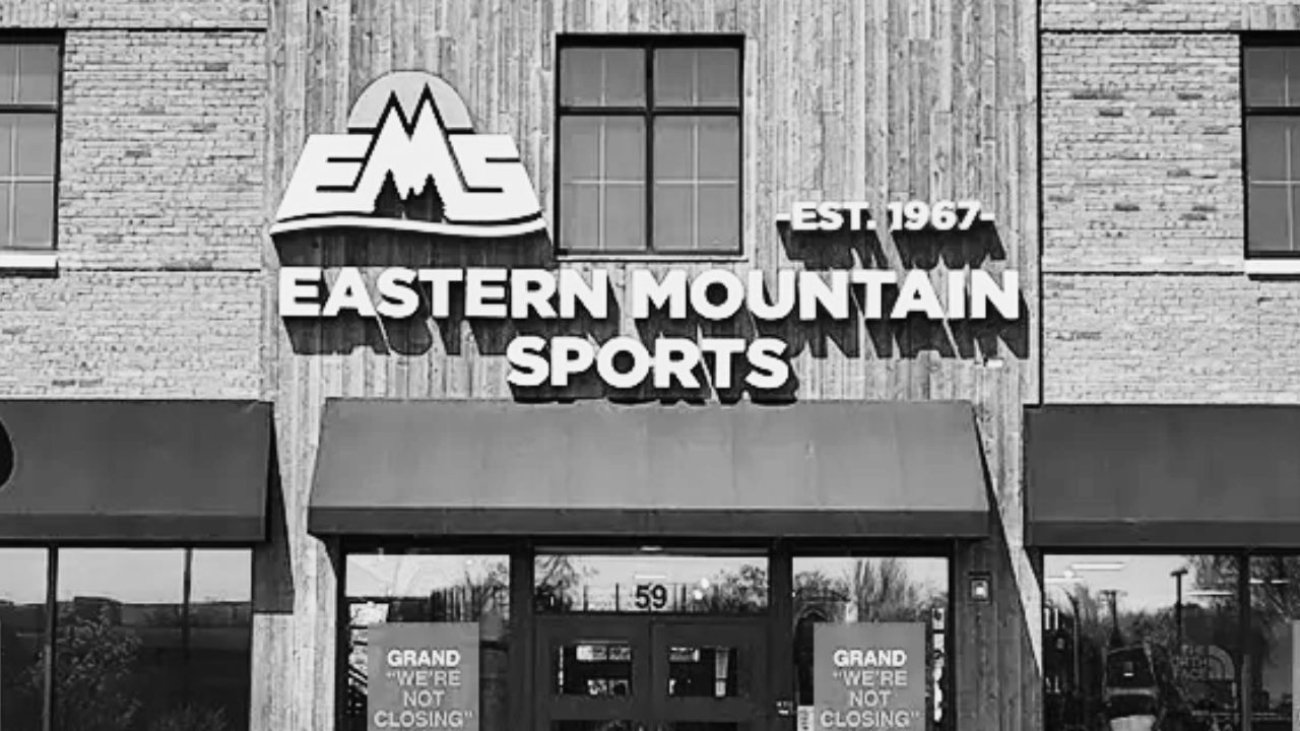
Eastern Mountain Sports has been a fixture in Northeast outdoor retail for more than five decades. So when a bankruptcy filing hit in 2024, customers, employees, and creditors all had the same question: is EMS done for good?
The answer is more nuanced than a simple yes or no. Most EMS locations did close. But the brand itself did not disappear entirely. Here is a clear breakdown of what happened, what was saved, and what EMS looks like today.
The Short Answer — EMS Is Partially Closed, Not Fully Gone
The majority of EMS store locations closed in 2024 as part of a bankruptcy liquidation process. That part is true. But the brand name, website, intellectual property, and seven core store locations were acquired by Mountain Warehouse in September 2024.
So EMS still exists — just at a fraction of its former size. It went from operating dozens of locations across the Northeast to seven stores concentrated in New England and New York.
One important distinction worth making: Bob’s Stores, the sibling brand under the same parent company, did close completely. EMS and Bob’s Stores were often discussed together during the bankruptcy proceedings, which caused some confusion. Bob’s did not survive. EMS did, in a reduced form.
What Led to the 2024 Chapter 11 Filing
Mountain Sports LLC, operating as Bob’s EMS Holdings and serving as the parent company of both EMS and Bob’s Stores, filed for Chapter 11 bankruptcy on June 18, 2024, in Delaware.
The immediate trigger was PNC Bank, the company’s primary lender, cutting off funding. When a company loses its credit line, it often cannot cover basic operating costs. That is effectively what happened here.
But the financial trouble did not start in 2024. EMS had already been through ownership instability for years — moving from Vestis Retail Group to GoDigital Media Group to Mountain Sports LLC. Each transition came with its own financial strain, and the company never fully stabilized.
The headquarters and distribution center in Meriden, Connecticut were also slated for closure, with plans to shift operations remotely or into surviving store locations. That signaled the scope of the downsizing even before final decisions about stores were made.
This was not EMS’s first encounter with financial distress. The pattern of ownership changes and repeated instability reflects broader challenges in specialty outdoor retail — a market facing steady pressure from e-commerce and large-format competitors.
Which Stores Closed and Which Ones Stayed Open
EMS announced the closure of at least 14 stores across seven states as part of the initial bankruptcy process. Among the named closures were locations in Manchester and Peterborough, New Hampshire.
Going-out-of-business sales at the remaining non-acquired EMS locations wrapped up around September 30, 2024. After that date, those stores stopped operating.
Not every location closed immediately. During the proceedings, stores in West Lebanon, North Conway, and Portsmouth, New Hampshire were identified as remaining open while decisions were still pending. These were part of the profitable core group that Mountain Warehouse ultimately retained.
The seven locations that survived were the strongest-performing stores — the ones that made financial sense to keep running. Customers in areas without one of those seven locations lost their nearest EMS store entirely.
Think of it like a regional restaurant chain closing most of its locations while keeping a handful of flagship spots. The brand name survives, but if your local branch was not one of the core locations, it is gone.
How Mountain Warehouse Acquired the EMS Brand
Mountain Warehouse, a UK-based outdoor retailer, entered the picture as what is known in bankruptcy law as a stalking horse bidder. They submitted an initial bid of $5 million for key EMS assets during the bankruptcy proceedings.
A stalking horse bid sets a minimum floor price for an asset sale. It keeps the process open to competing bids, but if no one bids higher, the original bidder wins. In this case, no competing bids emerged.
The final acquisition closed on September 2–3, 2024, at a total value of $10 million. The purchase included the EMS brand name, website, intellectual property, and seven core store locations. More than 100 EMS employees retained their positions as a result of the deal.
This type of transaction falls under Section 363 of the U.S. Bankruptcy Code, which allows a debtor to sell assets outside the normal reorganization process. It is a common tool used in Chapter 11 cases to preserve the most valuable parts of a struggling business while liquidating the rest.
From Mountain Warehouse’s perspective, the deal made strategic sense. Rather than entering the U.S. market from scratch, they acquired a regional brand with genuine recognition and loyalty among Northeast outdoor enthusiasts. EMS gave them an established name, an existing customer base, and operating stores — all for a relatively modest price.
What Happened to Creditors and Employees
The outcome varied significantly depending on where you sat in the process.
Employees at the seven acquired stores kept their jobs after the Mountain Warehouse deal closed. That was a direct result of the acquisition — without it, those positions would have been eliminated along with the rest.
Employees at the closed locations were not as fortunate. When a store shuts down through liquidation, those jobs end. The bankruptcy process does not protect workers at locations that were not part of the sale.
For creditors — suppliers, landlords, and others owed money by the old parent company — the picture is bleak. The liquidating plan for Mountain Sports LLC projected recoveries of less than 3% for general unsecured creditors on a claim pool estimated between $35 million and $40 million. A confirmation hearing for that plan was scheduled for March 31, 2026.
That hearing relates to the wind-down of the old corporate entity, not to the ongoing operations of EMS under Mountain Warehouse. The bankruptcy estate and the surviving brand are now separate matters.
Where EMS Stands Today
As of the latest available reporting, EMS operates seven store locations in New England and New York under Mountain Warehouse ownership. The brand’s website continues to function, and the intellectual property is intact.
The old parent company, Mountain Sports LLC, is in wind-down mode. That process involves settling remaining debts and closing out the bankruptcy estate — but it does not affect whether EMS’s surviving stores stay open.
Whether Mountain Warehouse will expand the EMS footprint, maintain it at seven locations, or make further changes is not yet clear. No public announcements have been made about major strategic shifts in either direction.
For business readers, EMS is a practical example of how distressed brands can survive in reduced form through bankruptcy asset sales. The corporate shell may be gone, but the brand can persist under new ownership — smaller, leaner, and repositioned. Road of Business covers similar cases where the distinction between a brand’s legal structure and its public-facing presence matters considerably.
The Key Takeaway
Eastern Mountain Sports is not completely out of business, but it is a much smaller operation than it was before 2024. Most of its stores closed. Its parent company failed. Creditors recovered very little.
At the same time, the EMS brand, its website, and seven core stores survived — acquired by Mountain Warehouse for $10 million through a structured bankruptcy sale. Over 100 employees kept their jobs, and the brand continues to serve customers in its remaining markets.
For anyone wondering whether to drive to a nearby EMS location or shop the website, the answer is: check whether your location was among the seven retained stores. If it was not, that store is permanently closed. If the website is your destination, it remains active under the new ownership.
The broader lesson here is one that applies across specialty retail — regional loyalty and brand recognition do not automatically protect a business from financial mismanagement, ownership instability, or a lender pulling the plug. EMS survived, but just barely, and in a much smaller form than the brand its longtime customers remember.