
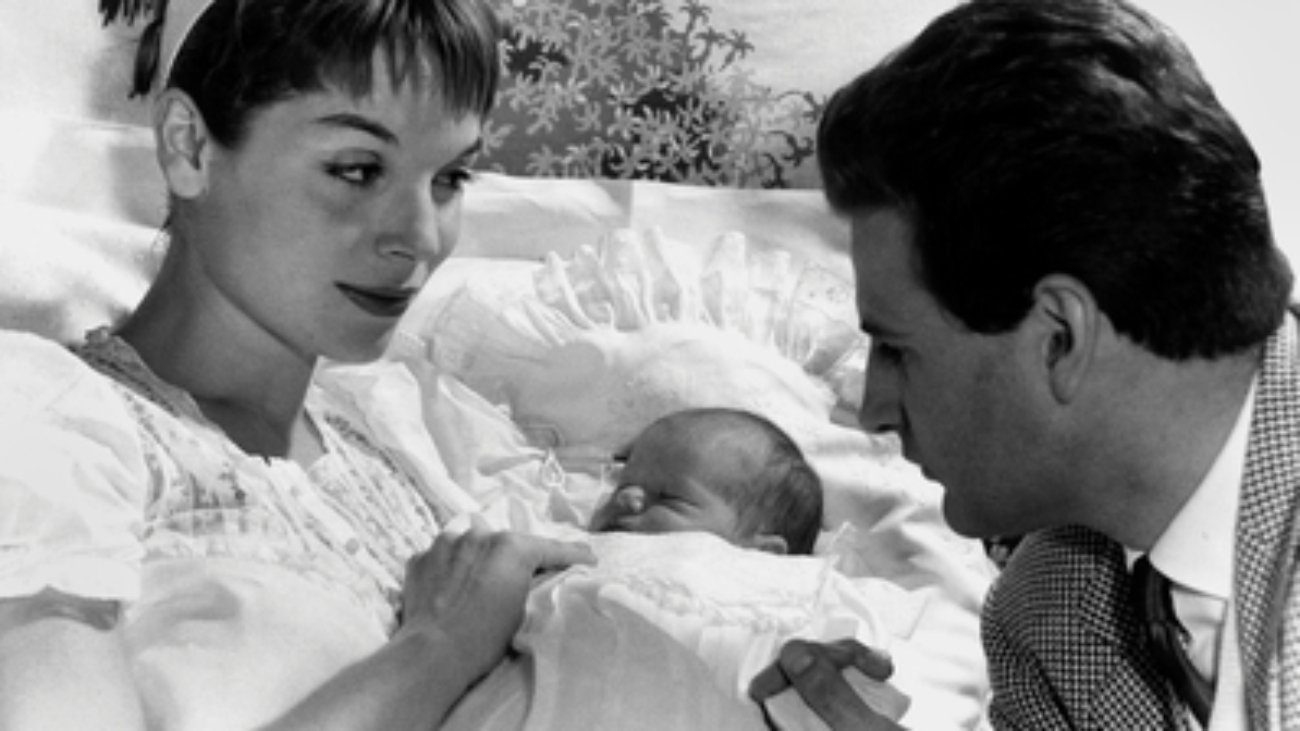
The name Count Franco Mancinelli Scotti di San Vito surfaces most often alongside one well-known face — Italian actress and model Elsa Martinelli. Yet the man himself remains a largely undocumented figure in public records. Most searches for Franco lead quickly to Martinelli’s career, a 1957 photograph, and scattered references in Italian local history.
This article draws on what confirmed sources actually say about Franco. That includes his place within the Mancinelli Scotti family of Narni, his marriage to Martinelli, the origins of the “Count of San Vito” title, and an honest account of where the documented record runs out.
Who Was Count Franco Mancinelli Scotti di San Vito?
Franco appears in sources under a few different name forms: Franco Mancinelli Scotti, Count Franco Mancinelli Scotti di San Vito, and shorter variations of both. Depending on the source — a photograph caption, a local history article, a genealogical record — the name can look slightly different each time.
What the public record does not provide is a confirmed birth date, death date, or professional occupation. No reliably sourced biographical profile for Franco appears in available records. That absence doesn’t mean Franco lived quietly by choice. It more likely reflects the gap between aristocratic family history and the kind of documentation that makes it into modern public databases.
A 2023 local-history article published by TerniToday, which focused on the Mancinelli Scotti family, identifies Franco as a cousin of Ludovico Mancinelli Scotti and as the husband of Elsa Martinelli. That family connection is the clearest anchor for placing Franco within a documented lineage. His public identity rests primarily on those two facts: his family name and his marriage.
The title “di San Vito” is a nobiliary designation tied to the Mancinelli Scotti line, not a modern legal credential. It reflects a historical inheritance that passed through the family over centuries, which is explained in more detail below.
Franco Mancinelli Scotti and Elsa Martinelli
The most common reason readers search for Franco is his connection to Elsa Martinelli. A photograph dated to approximately 1957 identifies him as Martinelli’s first husband. The caption, published by Pleasure Photo Room in 2014, is one of the clearest pieces of public evidence linking the two.
The 2023 TerniToday article about the Mancinelli Scotti family also describes Franco as Martinelli’s husband, placing the relationship in the 1950s. These two sources — the photograph caption and the local history account — are the strongest available confirmation of the marriage.
Beyond that, the record is quiet. No located source confirms the precise wedding date, how long the marriage lasted, whether the couple had children, or the circumstances under which it ended. Those details should be treated as unknown rather than assumed. It would not be accurate to fill in those gaps with guesswork.
What is clear is that Martinelli was internationally prominent during this period, while Franco does not appear to have held a comparable public profile independent of the family name. He is identified in relation to her, not the other way around.
Elsa Martinelli’s Career and Public Profile
Understanding why people search for Franco requires understanding who Elsa Martinelli was. She was not simply a socialite or an aristocrat’s partner. She was one of Italy’s most recognized models and international film actresses of the mid-twentieth century.
Martinelli won the Silver Bear for Best Actress at the 1956 Berlin International Film Festival. The film was Donatella, directed by Mario Monicelli. That recognition came early in her film career and signaled the kind of international attention she would sustain for years.
Her work extended across both European and Hollywood productions. She built a career on her own terms, and her fame was established well before — and well beyond — her marriage to Franco. For anyone researching the couple, it is worth being clear: Martinelli is the documented public figure. Franco is identified in relation to her, not the reverse.
Her profile is the main reason genealogical curiosity about her early life persists. People interested in her story naturally ask about the people around her, including who she married first.
The Mancinelli Scotti Family and Their Roots in Narni
The Mancinelli Scotti family is associated with Narni, a hilltop town in Umbria in central Italy. The family name itself reflects a union of two older lines — the Mancinelli and the Scotti — that came together through inheritance and marriage arrangements beginning roughly in the seventeenth century.
The Mancinelli are described as an old Umbrian family with documented roots in Narni. Family-history sources connect them to heraldic traditions reaching back to medieval times, though those older claims should be understood as part of family history and tradition rather than independently verified archival fact.
The connection to the Scotti line — and to San Vito — came through inheritance. Historical accounts state that Marta Scotti, described as the last of the Scotti line at San Vito, died in 1703 without direct heirs. Through her will, Giovanni Mancinelli of Narni became her universal heir. That transfer is identified as the key moment when the San Vito connection passed to the Mancinelli family.
From that point, the combined family name and the associated title traveled together through successive generations. Franco, as a member of this line, carries that history in his name — whether or not modern records have captured much else about his individual life.
The Title “Count of San Vito” — What It Means
The designation “Count of San Vito” — or Conte di San Vito in Italian — is a nobiliary title historically associated with the Mancinelli Scotti family. Genealogical and heraldic sources, including entries in Italian armorial records, link the family to this title through the inheritance described above.
It is important to be straightforward about what this kind of title does and does not represent today. Historic Italian titles may remain part of a family’s genealogical identity and cultural heritage. They do not automatically confer legal standing, political privileges, or formal government recognition in modern Italy. When Franco is referred to as “Count,” it reflects the family’s nobiliary tradition rather than a currently enforced legal status.
That distinction matters when reading photograph captions, genealogical websites, and local history articles. The title is real in the sense that it has a documented historical basis. Its modern significance is largely one of heritage and family identity.
Franco Mancinelli Scotti vs. Francesco Mancinelli Scotti
Anyone researching this family will encounter another name that looks very similar: Francesco Mancinelli Scotti. It is essential not to confuse the two.
Francesco Mancinelli Scotti was an archaeologist born in Civita Castellana on July 23, 1847, and who died in Rome on July 24, 1936. His life and work are documented in academic records, including entries in the research catalogue of the Università La Sapienza in Rome. He is a distinct historical figure with his own documented career.
Franco — Elsa Martinelli’s husband — is a different person from a different generation. The shared family surname and aristocratic title can make the names look interchangeable at a glance. They are not. Keeping that distinction clear is one of the more practical things this article can offer to anyone sorting through search results.
For a broader look at how public figures and their family histories intersect with documented records, Road of Business covers topics across celebrity profiles, biography, and public identity.
What the Available Record Confirms — and What It Doesn’t
It is worth being direct about the limits here. The confirmed public record on Franco Mancinelli Scotti di San Vito is genuinely limited.
What is confirmed:
- Franco belonged to the Mancinelli Scotti family of Narni in Umbria.
- He is identified as a cousin of Ludovico Mancinelli Scotti in a 2023 local history account.
- He married Elsa Martinelli, most likely during the 1950s, and is identified as her first husband in a 1957 photograph caption.
- The title “Count of San Vito” is historically associated with the Mancinelli Scotti family through an inheritance dating to 1703.
What is not confirmed in any located source:
- Franco’s birth date or death date.
- His occupation or professional life.
- The exact date of his marriage to Martinelli.
- Whether the couple had children.
- How or when the marriage ended.
None of these unknowns should be filled in with assumption. Gaps in the public record are gaps, not invitations to speculate.
Conclusion
Count Franco Mancinelli Scotti di San Vito is a figure whose documented presence in public records is slim but not entirely absent. He is placed within an Italian aristocratic family with a traceable history in Narni and Umbria, and he is confirmed as the first husband of internationally recognized actress and model Elsa Martinelli.
His story is most usefully understood alongside the family history that shaped his name and the marriage that connected him to one of mid-century Italy’s most prominent public figures. Beyond that, the honest answer is that the available record runs thin — and that is worth saying clearly rather than papering over with details that have not been verified.
Also Read: