
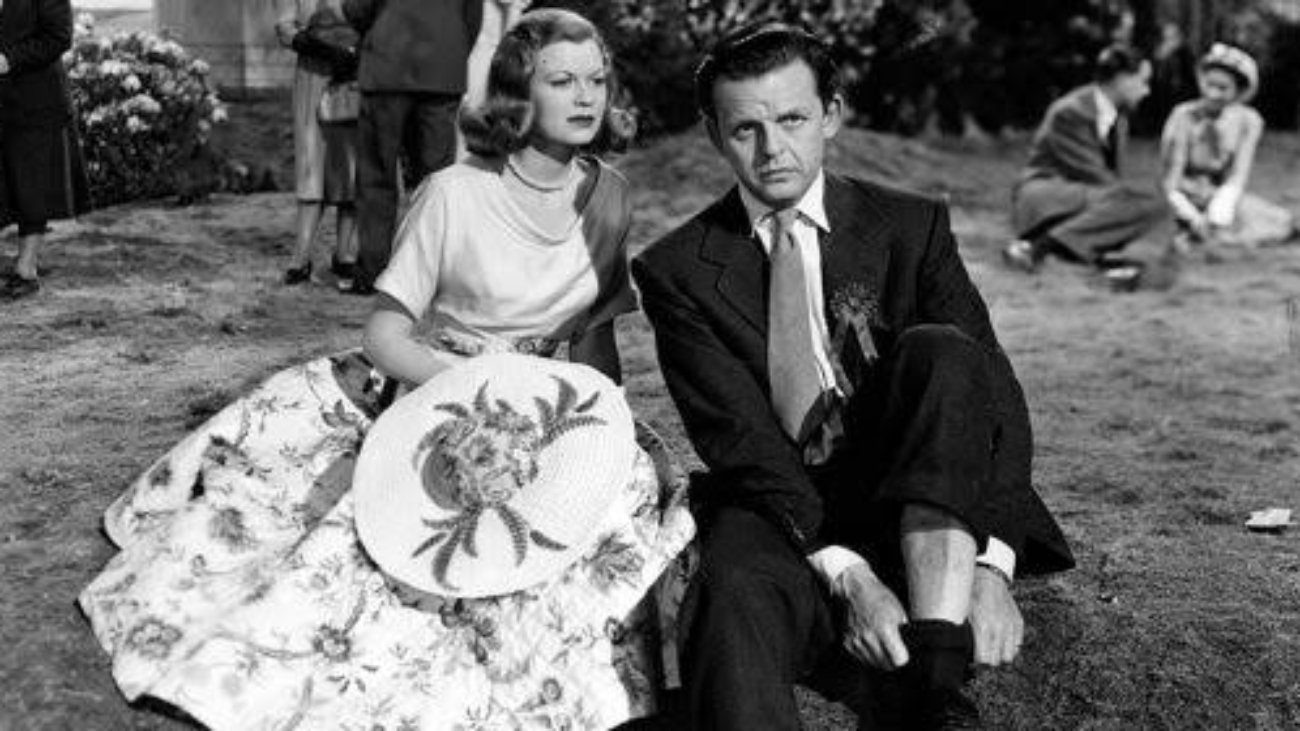
Most people who recognize David Tomlinson from Mary Poppins or The Love Bug know very little about the personal losses that shaped his early life. Before he became a beloved figure in Disney films, Tomlinson lived through a deeply painful chapter — a first marriage that lasted only three months and ended in tragedy.
At the center of that story is Mary Lindsay Hiddingh. She was not a public figure or an entertainer. But her life, her family, and the circumstances of her death in December 1943 are a real and documented part of wartime history. This article covers what the public record actually confirms about who she was, her two marriages, and what happened in New York at the end of 1943.
Who Mary Lindsay Hiddingh Was
Mary Lindsay Hiddingh was not a celebrity in her own right. She does not appear in entertainment databases or film credits. She is historically notable primarily through her connections — to her first husband, Major Armand Guy Hiddingh, and later to British actor David Tomlinson.
Available biographical accounts identify her father as L. Seton Lindsay, described as a vice president of New York Life Insurance Company. That places the family in a professional New York social circle, though not much more can be said with certainty.
Some online sources use labels like “socialite” or “heiress” when referring to Mary. Those descriptions are not confirmed by primary records and should be treated with caution. Reliable, detailed biographical information about Mary herself is limited. The strongest contemporary source is a New York Times report from December 1943, supported by references in David Tomlinson biographies and family history compilations.
Her First Marriage and Early Widowhood
Before she met David Tomlinson, Mary had already experienced serious loss. She had been married to Major Armand Guy Hiddingh, and the two had two young sons together — Michael and John.
Major Hiddingh was killed in action in 1941 during World War II. Mary was left a widow with two small children, navigating wartime life in New York. Both the New York Times 1943 report and the David Tomlinson Wikipedia article reference Major Hiddingh’s death in combat and the existence of the two sons.
Beyond those confirmed facts, the available sources do not provide detailed information about Major Hiddingh’s specific military unit, his nationality, or other personal background. What is clear is that his death left Mary as a single mother during one of the most difficult periods in modern history.
The Marriage to David Tomlinson in 1943
David Tomlinson was a British actor who was connected with the Royal Air Force during the war years. He was traveling in North America during this period, and it was there that he met Mary.
The two married in New York in September 1943. At that point in his career, Tomlinson had not yet achieved the international recognition he would later earn from his Disney work. This was early in his professional life, and he was still a relatively unknown figure outside of Britain.
Their marriage was brief. A simple timeline helps put the events in order:
- 1941: Major Armand Guy Hiddingh is killed in action.
- September 1943: Mary marries David Tomlinson in New York.
- December 2, 1943: Mary and her two sons, Michael and John, die in New York.
From the wedding to Mary’s death was fewer than three months. The marriage date is confirmed by multiple sources, including the elCinema profile for Tomlinson and biographical accounts connected to his career.
The Events of December 1943
On December 2, 1943, Mary Lindsay Hiddingh died in New York alongside her two sons, Michael and John. The New York Times reported on the event the following day. The headline and the article documented the fall from a hotel and the deaths of all three.
The contemporary newspaper report is the most reliable source for the basic facts of what happened. It should carry more weight than later retellings, which have sometimes added emotional or psychological framing that goes beyond what the original reporting actually stated.
Some biographical accounts and popular articles describe Mary as depressed or despondent at the time. Those descriptions come from retrospective sources, not from the 1943 newspaper report itself. It is worth being careful here: later interpretations are not the same as documented fact, and no available source justifies a detailed psychological explanation of her state of mind.
The Wartime Context
Several accounts note that wartime separation played a role in the circumstances surrounding Mary’s death. Tomlinson was expected to return to Britain, and wartime travel restrictions made it difficult — possibly impossible — for Mary to travel with her two young sons.
The New York Times report references the immediate context of the situation, including the wartime conditions that affected the family’s options. Some sources describe the difficulty of reuniting with Tomlinson across the Atlantic as a significant factor in the events leading up to December 2.
However, it would not be accurate to state that travel restrictions were the sole or certain cause of what happened. The sources document the circumstances, but they do not — and cannot — fully explain Mary’s motivations. Any article that claims certainty on that point is going beyond what the evidence supports.
David Tomlinson After 1943
The loss of his first wife and her two young sons was a major and painful event in Tomlinson’s personal history. He carried that early grief into the years that followed.
He later remarried. In 1953, Tomlinson married Audrey Freeman, and the couple went on to build a family together. His acting career continued to grow through the 1950s and into the 1960s.
His most recognized roles came during his work with Disney. He played the stern but ultimately warm George Banks in Mary Poppins (1964) and starred in The Love Bug (1968). Those performances made him a household name for generations of viewers, most of whom had no idea what he had lived through in the early 1940s.
For readers interested in the broader context of celebrity careers and the personal stories behind them, Road of Business explores how public figures navigate professional and personal challenges across different fields.
Why People Search for Mary Lindsay Hiddingh
Mary’s name surfaces in a few different contexts. Some readers come across her through Tomlinson biographies or film history articles. Others find her through genealogy research — searching for the Lindsay or Hiddingh family lines, or looking into records connected to Major Hiddingh.
Her name appears in newspaper archives, marriage records, family trees, and biographical footnotes rather than in celebrity entertainment databases. She was not a famous person, and it would be misleading to present her as one. But her story is documented, and it is a real part of both wartime New York history and David Tomlinson’s personal biography.
For anyone researching her, the most reliable starting point is the New York Times December 1943 archive. Tomlinson biographies and family history sources can add useful context, but details that appear only on unverified genealogy pages or copied blog posts should be treated with caution.
What the Record Does and Does Not Confirm
It is worth being direct about the limits of what is publicly known. The confirmed facts are:
- Mary Lindsay Hiddingh was the daughter of L. Seton Lindsay, a New York Life Insurance vice president.
- She was previously married to Major Armand Guy Hiddingh, who was killed in action in 1941.
- She had two sons, Michael and John, from that first marriage.
- She married David Tomlinson in New York in September 1943.
- She and her two sons died on December 2, 1943, in New York.
What is not confirmed by reliable primary sources includes descriptions of her as a socialite or heiress, specific details about her education or occupation, and any precise explanation of her state of mind or motivations.
Mary Lindsay Hiddingh was a real person whose life intersected with significant historical events. Her story deserves to be told accurately, without filling in the gaps with details that simply are not there.
A Final Note
Mary Lindsay Hiddingh lived through the death of her first husband, raised two young children during wartime, and briefly found a second marriage before her life ended in December 1943. She was thirty years old or thereabouts when she died, based on the timeline of events, though her exact birth year is not confirmed in available public records.
She is remembered today mostly as a footnote in David Tomlinson’s biography — which is understandable given his later fame, but also a little unfair to the full reality of her life. The public record is thin, but what it does confirm is enough to understand that her story was shaped by war, loss, and the very real pressures of being a widowed mother in wartime New York.
Also Read: