
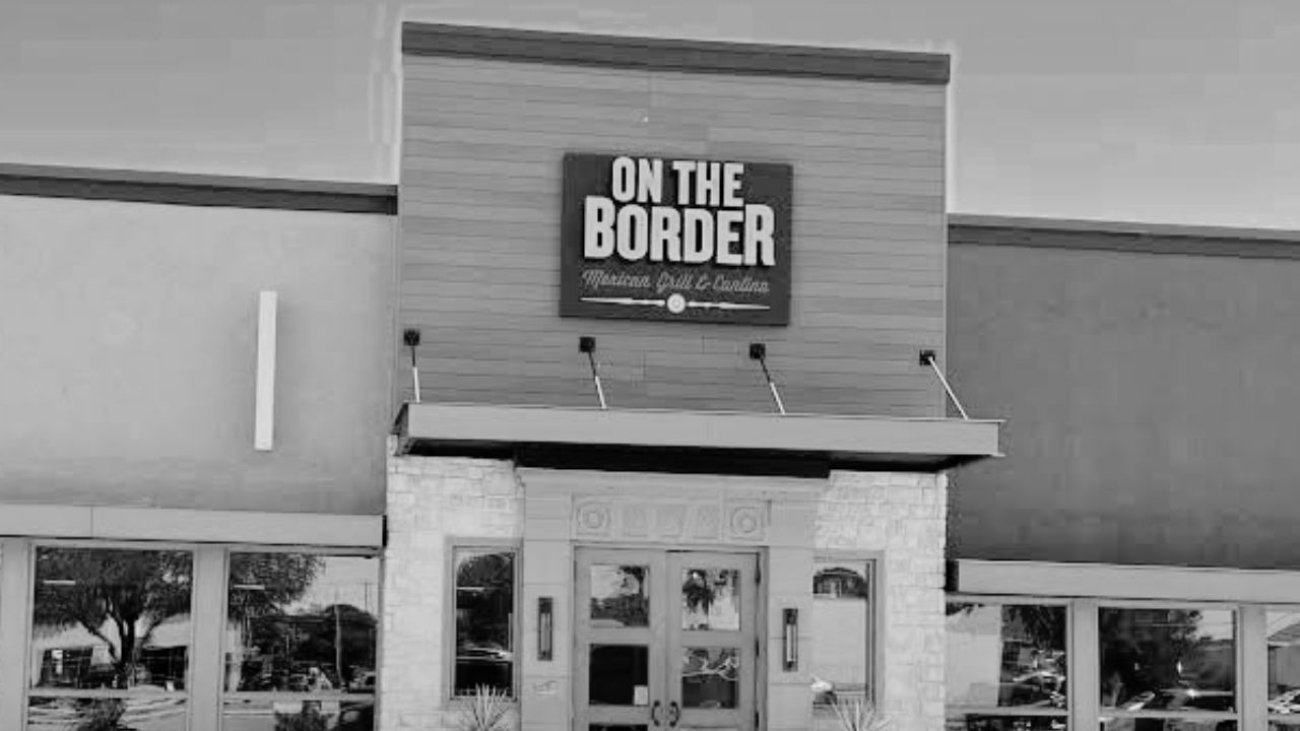
If you’ve driven past a shuttered On The Border recently or seen the news, here’s the short answer: yes, the chain is effectively finished as a national brand. All company-owned restaurants closed by June 12, 2026, and the corporate entity filed for Chapter 7 bankruptcy — meaning it’s liquidating, not reorganizing.
But the full picture has some important details worth understanding, especially if you’re a former customer, an employee, or someone trying to make sense of why a 40-year-old chain reached this point.
The Current Status of On The Border as of 2026
As of mid-2026, On The Border no longer operates as a national chain. All company-owned restaurants are closed. The corporate parent filed Chapter 7 bankruptcy, which means there’s no restructuring plan — the company is winding down and liquidating assets.
A small number of franchise locations remain open in California, Florida, Nevada, South Dakota, and South Korea. These are independently owned and were not part of the corporate Chapter 7 filing. However, they’re operating on borrowed time under that name. Once the On The Border brand officially dissolves, those franchisees will be forced to rebrand.
If you’ve come across older articles saying “some locations remain open,” that information was accurate during the Chapter 11 phase in 2025. It no longer reflects current reality for the corporate brand.
How On The Border Got Here — The Collapse Timeline
On The Border was founded in Dallas in 1982. For over four decades, it operated as a mid-market Tex-Mex casual dining chain, serving fajitas, queso, and margaritas to millions of customers across the U.S.
Here’s how the final years played out:
- March 2025: OTB Holding LLC filed for Chapter 11 bankruptcy protection in federal court in Georgia. At the time, the company operated around 60 company-owned restaurants across 18 states, plus roughly 20 franchise locations including some in South Korea.
- Spring 2025: The company moved to close more than 70 locations and terminate leases as part of its restructuring plan.
- Late 2025: Pappas Restaurants — the Houston-based group behind Pappasito’s Cantina and Pappadeaux Seafood Kitchen — acquired the On The Border brand through a bankruptcy auction.
- June 2026: Approximately one year after that acquisition, Pappas shut down all remaining company-owned locations and filed Chapter 7 to liquidate the brand. The final closure date for corporate-owned restaurants was June 12, 2026.
That’s a fast collapse for a chain that had operated for more than four decades. But it didn’t happen overnight — it was the result of years of compounding problems.
Why On The Border Failed
The reasons are documented in court filings and company statements. This wasn’t one bad quarter or one bad decision. It was a combination of structural pressures that built over several years.
A Liquidity Crisis That Accelerated Everything
Court filings describe a steep and rapid drop in liquidity. Before the Chapter 11 filing, the company had already stopped paying vendors and landlords. In response, landlords began repossessing properties and suppliers cut off services. That made daily operations even harder, which made the financial hole deeper.
Declining Guest Counts
Guest traffic had been falling for multiple years before the bankruptcy. Many locations were underperforming, which means they were generating revenue but not enough to cover costs. When you have dozens of those locations across a national footprint, the losses compound quickly.
Rising Costs on Multiple Fronts
Food inflation pushed input costs higher at a time when customers were already spending less at restaurants. On top of that, higher minimum wages in key states increased labor costs. For a mid-priced casual dining chain with thin margins, those two pressures together are difficult to absorb.
A Structural Shift in Consumer Behavior
Consumers have been pulling back from mid-priced sit-down chains for years. Fast-casual options are faster and cheaper. Delivery apps made eating at home more convenient. When grocery prices were lower relative to restaurant prices, more people cooked at home. On The Border sat in exactly the wrong price segment — not cheap enough to win on value, not distinctive enough to win on experience.
This is the same pattern that has hit other casual dining chains. Red Lobster and TGI Fridays both filed for bankruptcy protection in recent years for similar reasons. On The Border is not an isolated case — it’s part of a broader structural decline in the mid-market sit-down restaurant category.
What the Pappas Acquisition Did and Did Not Fix
Pappas Restaurants is a legitimate operator. They run well-regarded Tex-Mex and seafood concepts in Houston and beyond. When they acquired On The Border through the bankruptcy auction, it wasn’t a passive financial play — these are people who actually run restaurants.
That made the eventual failure more telling. Even a credible, experienced operator with relevant brand knowledge couldn’t turn On The Border around. The chain went from roughly 33 remaining locations post-acquisition to zero company-owned locations within about a year.
There are a few possible explanations for why the Pappas acquisition didn’t work:
- The brand may have been too damaged to recover consumer trust at scale.
- The remaining locations may have been structurally unprofitable regardless of management quality.
- Broader industry headwinds — inflation, changing dining habits — didn’t ease during the turnaround window.
- The cost of reviving a national casual dining brand may have simply outweighed any realistic return.
Pappas has said publicly that it’s “evaluating the future of the On The Border name,” but no concrete revival plan has been announced. For now, the brand is effectively done.
This is a useful business lesson on its own. Buying a distressed brand cheap doesn’t guarantee a turnaround. If the underlying economics are broken — declining traffic, thin margins, high fixed costs — a new owner inherits those problems along with the brand.
What This Means for Employees, Franchisees, and Customers
Employees
Workers at many closing locations received very little notice — some reports indicate as few as two days. That’s a serious hardship for hourly workers who live paycheck to paycheck. Local coverage from cities like Tyler, Texas showed managers telling staff that their location would close after the upcoming Friday. The corporate messaging mentioned supporting team members through the transition, but specific details about severance or job placement were limited.
Franchise Owners
Franchisees in California, Florida, Nevada, and South Dakota are in a difficult spot. They weren’t part of the Chapter 7 filing, but the corporate infrastructure they relied on — marketing, supply contracts, technology systems — is disappearing. They’ll eventually need to rebrand. That means new signage, new branding, potentially new suppliers, and the cost of building customer recognition under a different name. It’s not an impossible situation, but it’s an expensive and complicated one.
This is the real risk of franchising with a financially troubled parent company. The franchisee’s own operation might be profitable, but when the brand dissolves, they lose the name recognition they’ve been building for years.
Customers
If you have an On The Border gift card, your best move right now is to contact one of the remaining franchise locations directly — in California, Florida, Nevada, or South Dakota — and ask if they’ll honor it. Corporate systems are shutting down, and there’s no guarantee those gift cards will be usable much longer. The same applies to any loyalty rewards you may have accumulated.
For customers looking for alternatives, regional Tex-Mex chains like Pappasito’s, or national options like Chili’s, are the closest substitutes for the casual dining experience On The Border offered.
The Bigger Picture for the Restaurant Industry
On The Border’s collapse is not a one-off story. It’s part of a pattern. Casual dining chains that built their model around large footprints, moderate prices, and sit-down service are under real pressure from multiple directions at once.
Fast-casual concepts took the value-focused customers. Delivery platforms took the convenience-focused customers. And the customers who remained became more selective about where they spent money as restaurant prices climbed. Chains caught in the middle — not cheap, not premium — have had the hardest time.
For entrepreneurs and operators thinking about the restaurant space, On The Border is worth studying. The chain didn’t collapse because of one management failure or one bad strategy. It collapsed because the business model it was built on stopped working, and the company couldn’t adapt quickly enough to survive. For more business case studies and practical analysis like this, check out Road of Business.
The Bottom Line
On The Border is, for all practical purposes, out of business. The corporate brand has collapsed, all company-owned locations are closed, and the Chapter 7 filing makes it clear this isn’t a pause — it’s a wind-down.
A handful of franchise locations are still serving Tex-Mex food in a few states, but they’re operating under a brand name that’s on its way out. When those operators eventually rebrand, the On The Border name will be gone from the market entirely — unless Pappas decides to do something with it in the future, which remains an open question with no clear answer yet.
After 40-plus years of fajitas and margaritas, the chain couldn’t outlast the combination of rising costs, falling traffic, and a consumer shift that left mid-market casual dining with fewer and fewer customers willing to show up.
Also Read: