
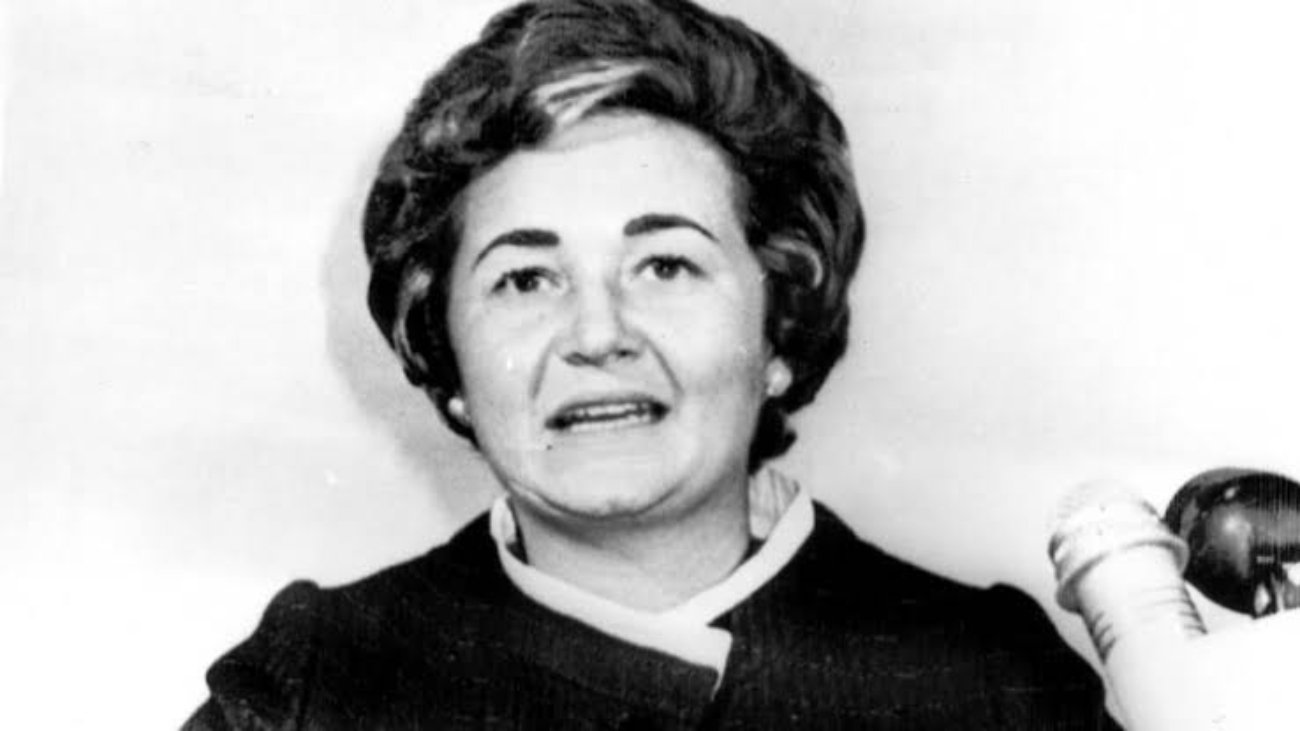
Most people recognize the surname Castro Ruz from Fidel and Raúl Castro. But fewer know the woman whose name forms the second half of that combination — Lina Ruz González, their mother.
She was not a political figure. She held no public office and gave no famous speeches. Yet her name appears in genealogy databases, Cuban history resources, and political biographies around the world. This article covers what is publicly documented about her life: her birth and background, her family’s journey across Cuba, her relationship with Ángel Castro, her seven children, and her death in 1963.
Who Was Lina Ruz González?
Lina Ruz González was a Cuban woman born on 23 September 1903 in Catalina, Pinar del Río, Cuba. She died on 6 August 1963 in Birán, Holguín, Cuba. She lived for 59 years, spending the second half of her life in eastern Cuba, far from where she was born.
She is best known as the mother of Fidel Castro and Raúl Castro, though she had seven children in total. Her public profile exists largely through her family connections rather than any independent political or public career.
It is worth knowing that her name appears in different forms across various records. You may see her listed as “Lina Ruz,” “Lina Castro Ruz,” or “Lina Ruz González.” The last form is the most commonly documented full name in genealogical sources.
Her Parents, Siblings, and Rural Roots
Before focusing on the Castro connection, it helps to understand Lina’s own family background. She was not simply a footnote in someone else’s story — she came from her own family, with her own roots in rural western Cuba.
Genealogical records identify her parents as Francisco Ruz Vázquez and Dominga González Ramos. Her siblings, as listed in FamilySearch records, include Agustina Isabel “Belita” Ruz González, Enrique Ruz González, and María Julia Ruz González.
The Ruz González family was a rural family, associated with agricultural work and tobacco cultivation — work that was common in Pinar del Río during that era. Detailed biographical records about Lina’s early years are limited. What is known comes primarily from genealogy databases and secondary accounts. That gap in the public record reflects how rural Cuban women of that period were often underdocumented, not that nothing existed in their lives.
The Move from Pinar del Río to Birán
One of the most consequential events in Lina’s life was a move she did not choose alone. Accounts report that the Ruz González family relocated from Pinar del Río — in western Cuba — to Birán in eastern Cuba, reportedly following hardship tied to a cyclone around 1917.
At that time, Lina would have been roughly 13 or 14 years old. Migration within Cuba for economic reasons was not unusual during this period. Families affected by storms, poor harvests, or land pressures often moved to regions where agricultural work was available.
Birán, located in what is now Holguín province, was where Ángel Castro y Argiz operated a large agricultural estate. The Ruz González family’s relocation placed them in the same geographic and social environment as this landowner — a connection that would shape the rest of Lina’s life. This detail comes from accounts surrounding a book about Lina called La Madrina de Birán, and should be understood as a reported account rather than a fully verified civil record.
Her Relationship with Ángel Castro and Their Family
According to multiple sources, Lina began working as a domestic employee in Ángel Castro’s household in Birán before entering a personal relationship with him. The circumstances of that relationship deserve honest framing.
Lina was approximately 19 years old when the relationship reportedly began, while Ángel was considerably older. She was also an employee in his home — a position of significant social and economic imbalance. Sources do not romanticize this arrangement, and neither should any account of it.
The timeline is also complicated by the fact that Ángel Castro was not legally free when the relationship started. Accounts indicate that his first marriage had not yet been formally dissolved. Because dates and details vary across secondary sources, the exact chronology is better understood as approximate rather than settled.
Some accounts report that Ángel Castro and Lina formally married in 1943, after his previous marriage had ended. Sources also indicate that Ángel later legally recognized the children he had with Lina, which affected their official surname registration. This is one reason Fidel’s early records and legal name status are sometimes described with varying details across different biographies.
Their Seven Children
Lina and Ángel had seven children together. Sources commonly identify them as:
- Ángela Castro Ruz
- Ramón Castro Ruz
- Fidel Castro Ruz
- Raúl Castro Ruz
- Juana Castro Ruz
- Emma Castro Ruz
- Agustina Castro Ruz
The surname structure — Castro Ruz — follows the Spanish naming convention where a person uses the father’s surname first, followed by the mother’s surname. So “Castro” came from Ángel Castro, and “Ruz” came from Lina Ruz González. That is why Fidel and Raúl are remembered as the Castro Ruz brothers, and why Lina’s name is embedded in one of the most recognized surnames in 20th-century political history.
Fidel Castro
Fidel Castro was born in Birán in 1926. He went on to lead the Cuban Revolution, take power in 1959, and govern Cuba for nearly five decades. He became one of the most consequential — and controversial — political figures of the 20th century. Lina was his mother.
Raúl Castro
Raúl Castro was born in 1931. He played a central role in the Cuban Revolution alongside his brother and later served as Cuba’s president from 2008 to 2018. He also remained influential within the Cuban Communist Party after leaving the presidency. Lina was his mother as well.
It is important to note that while Fidel and Raúl are the most historically prominent of her children, all seven of Lina’s children were real figures in Cuban life. Reducing her solely to the role of “Fidel Castro’s mother” understates the full scope of her family.
Lina as a Historical Figure in Her Own Right
Lina’s public visibility has always been filtered through the lens of her famous sons. That is partly a reflection of the times. Rural women in early 20th-century Cuba were rarely the subject of formal historical documentation.
A recent Cuban cultural report noted the presentation of a book, La Madrina de Birán, which focused on Lina’s life and her role within the Birán household and family. The report described her as a comparatively understudied figure compared with Ángel Castro. Whether that shifts meaningfully will depend on whether more primary sources about her life become accessible.
For readers who arrive at Lina’s name through genealogy research, it helps to know that FamilySearch lists her with her birth year, birthplace, death details, and immediate family. Those records are useful starting points, though they should be compared with civil or church records whenever possible. User-contributed genealogy trees — while helpful for leads — should not be treated as the final word on disputed facts.
If you are exploring Cuban family history or the background of public figures, resources like Road of Business can be a useful starting point for understanding how historical context connects to modern public figures and their legacies.
Her Death and Legacy
Lina Ruz González died on 6 August 1963 in Birán, Holguín — the same place she had spent most of her adult life. She was 59 years old.
She did not live to see much of what her sons became on the world stage. Raúl was 32 when she died, and Cuba’s revolutionary government was only four years old. Her death came before many of the events that would make the name Castro Ruz internationally known.
What she left behind was a family, a name embedded in the surnames of some of the most written-about figures in modern Cuban history, and a life that remains only partially visible in the public record. She was a rural woman from western Cuba who moved across the island, raised seven children, and lived through extraordinary historical circumstances — most of which unfolded quietly around her rather than through her.
That is not a small life. It is simply a life that history has taken longer to look at directly.
Also Read: