
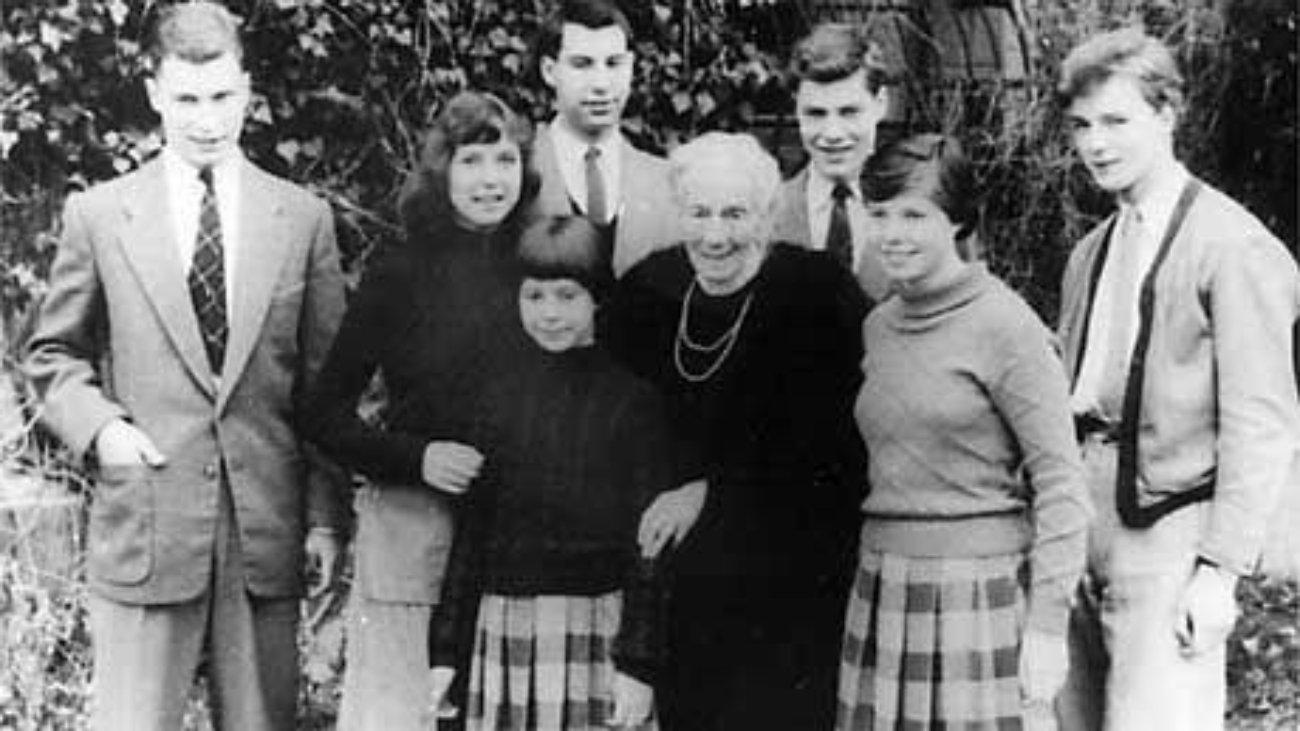
When people search for Valerie von L’Estocq, they usually arrive through genealogy databases or while researching her father — Claus Schenk Graf von Stauffenberg, the German Army officer at the center of the July 20, 1944 plot against Adolf Hitler.
Valerie was not a public figure in her own right. She left a small paper trail in family-history records and little else. But because her father is one of the most documented figures in German resistance history, her name continues to surface in searches, family trees, and historical threads.
This article covers what the available records confirm about Valerie — her identity, her family connection, her brief life, and the broader historical events that shaped her early years. Where records are limited or uncertain, that will be stated clearly.
Who Valerie von L’Estocq Was
Valerie appears in genealogy records under three name variations: Valerie von L’Estocq, Valerie von l’Estocq, and her birth name Valerie Schenk Gräfin von Stauffenberg. The capitalization of “von L’Estocq” differs depending on the database, but all of these refer to the same person.
If you search her married name and land on a result using her maiden name — or the other way around — that is not a different person. It is the same individual documented at different points in her life.
She was not a political figure, a military officer, or a public personality. The reason her name appears in historical and genealogy searches is straightforward: she was the daughter of Claus von Stauffenberg, and her family’s story is inseparable from one of the most significant events in the final years of World War Two.
Her public record is limited. The details that follow come primarily from an Axis History Forum genealogy thread and a Find a Grave memorial. These are useful starting points, but they are not civil registration records or archival biographies. Treat them as leads worth verifying, not settled facts.
Her Birth, Marriage, and Death — The Confirmed Timeline
According to available genealogy records, Valerie was born on November 15, 1940, in Bamberg, Germany. One source notes that this date was also her father’s birthday — a detail that appears in the genealogy thread but has not been independently confirmed here from a separate archival source.
She married Heino von L’Estocq in Munich on April 4, 1964. That marriage is where her surname changed from Stauffenberg to von L’Estocq, which explains the two name versions found in searches.
Valerie died on June 4, 1966, in Munich. She was approximately 25 years old. A Find a Grave memorial entry attributes her death to leukemia. That detail comes from a single memorial database, not from a medical record or a verified biographical source, so it should be treated with appropriate caution rather than as a confirmed fact.
Available records list no known occupation and no children. Again, these details come from forum-based genealogy posts, not from a wide range of independent public sources. They are worth noting, but not worth treating as definitive.
Her Father — Claus von Stauffenberg and the July 20, 1944 Plot
To understand why Valerie’s name appears in historical searches at all, you need to understand who her father was and what he did.
Claus Schenk Graf von Stauffenberg was a German Army officer who became a central figure in a military conspiracy to assassinate Adolf Hitler. On July 20, 1944, Stauffenberg placed a briefcase containing a bomb inside a conference room at Hitler’s East Prussian headquarters, known as the Wolf’s Lair, in Rastenburg.
Hitler survived. The briefcase had been moved slightly before the bomb detonated, and the heavy conference table partially absorbed the blast. With Hitler alive, the planned coup collapsed almost immediately.
It is worth clarifying one term that often comes up here. The plot is frequently called “Operation Valkyrie,” but Valkyrie was not originally the name of an assassination plan. It was an existing German emergency mobilization protocol — designed to maintain order inside Germany in case of a crisis. The conspirators adapted that plan as the framework for their intended coup after Hitler’s expected death. The plan was called Valkyrie; the broader effort to remove Hitler was built around it.
Claus von Stauffenberg was arrested in the early hours of July 21, 1944, and executed by firing squad that same night in the courtyard of the Bendlerblock building in Berlin. Valerie was three years old.
Her mother was Nina von Stauffenberg, who outlived her husband by decades and became an important figure in how the Stauffenberg family’s memory was preserved and discussed in postwar Germany.
What Happened to the Stauffenberg Family After the Plot
The Nazi regime’s response to the failed assassination was immediate and far-reaching. It did not stop with the conspirators themselves.
Nina von Stauffenberg was imprisoned after the plot. According to the memorial source, the Stauffenberg children were separated from their mother and placed in an institution. This was consistent with the Nazi regime’s broader practice of targeting the families of those accused of treason — a policy sometimes referred to by the German term Sippenhaft, meaning liability of kin.
This means that Valerie, as a young child, experienced the loss of her father to execution and separation from her mother — all within a short period of time. These are documented historical consequences, not speculation. The family’s wartime experience provides essential context for understanding the records that follow Valerie’s name.
Nina von Stauffenberg survived. She was released after the war ended and was eventually reunited with her children. She lived until 2006, and over the decades gave interviews and participated in commemorations of the July 20 resistance.
The broader story of the Stauffenberg family reached a large international audience through the 2008 film Valkyrie, in which Tom Cruise portrayed Claus von Stauffenberg. The film focused on the conspiracy and the assassination attempt, not on family members. Valerie had no role in the film and is not a character within it.
How to Read Genealogy Records on This Subject
If you have found Valerie’s name through a platform like MyHeritage, Find a Grave, or a genealogy forum, it helps to understand what those sources are and what they are not.
MyHeritage, for example, draws on family trees contributed by its members. Those trees can be extremely useful for identifying connections, dates, and locations — but they are only as accurate as the person who submitted them. MyHeritage itself notes that some records may be incomplete or restricted.
Find a Grave memorials are similarly user-contributed. They often contain valuable details, including dates and family connections, but a memorial entry is not the same as a civil registration certificate or a verified archival record.
Forum threads like the one on Axis History Forum can be well-researched by dedicated genealogists, but they carry the same caveat: they reflect the knowledge of the contributors, not necessarily the official documentary record.
For anyone researching the Stauffenberg family in depth, the right next step after finding these online leads is to consult German civil registration records, established biographies of Claus or Nina von Stauffenberg, or archival institutions that hold relevant documentation. Resources that cover business research methods, like Road of Business, often emphasize the same principle: treat secondary or user-generated sources as a starting point, not a finish line.
A Brief Summary of What the Records Show
- Full name at birth: Valerie Schenk Gräfin von Stauffenberg
- Married name: Valerie von L’Estocq
- Born: November 15, 1940, Bamberg, Germany
- Father: Claus Schenk Graf von Stauffenberg
- Mother: Nina von Stauffenberg
- Married: Heino von L’Estocq, Munich, April 4, 1964
- Died: June 4, 1966, Munich (cause reported as leukemia in one memorial source only)
- Children: None listed in available records
- Occupation: None listed in available records
These details come from genealogy forum posts and a memorial database. They are presented here as a summary of what can currently be found through public sources — not as a definitive biography.
Conclusion
Valerie von L’Estocq lived a short life largely outside of public view. She was a daughter of one of history’s most written-about resistance figures, and the events of 1944 shaped her earliest years in ways that records only partially capture.
What the sources confirm is modest: a birth in Bamberg, a marriage in Munich, and a death at 25. What they cannot confirm — her inner life, her views, her daily experience — should not be filled in with guesswork.
For readers who arrive at her name through genealogy searches, the honest answer is that the documented record is thin. What it connects to, however, is a family story that sits at the edge of one of the most consequential moments in twentieth-century history.
Also Read: