
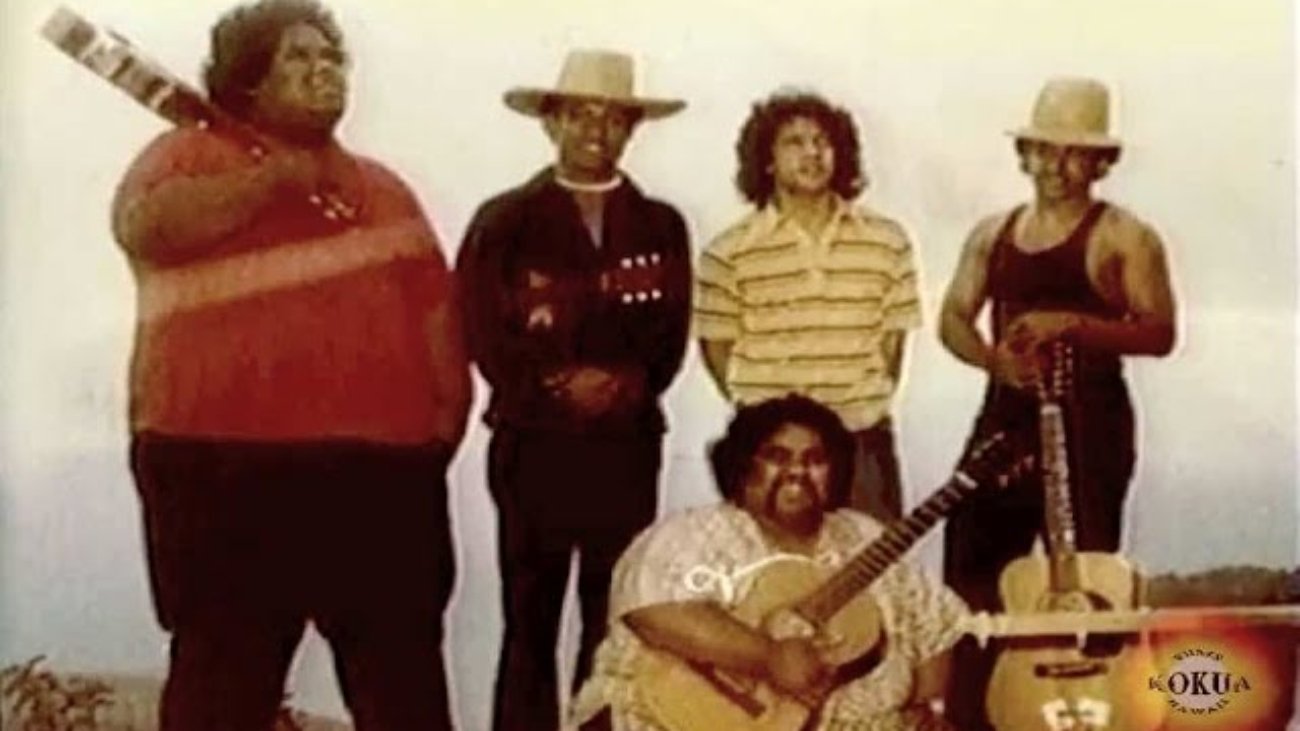
Most people who know Israel Kamakawiwoʻole’s music know very little about the family that raised him. His voice became one of the most recognized in Hawaiian music history, but the story behind that voice starts with the people around him — including his father, Henry Kaleialoha Naniwa Kamakawiwoʻole Jr.
This article looks at who Henry Jr. was, where he fits in the Kamakawiwoʻole family tree, what genealogy records confirm about his life, and how his family environment connected to Israel’s upbringing and musical path.
Who Henry Kaleialoha Naniwa Kamakawiwoʻole Jr. Was
Henry Jr. appears in genealogy records as a member of the Kamakawiwoʻole family of Honolulu, Oʻahu. To the general public, he is known primarily as the father of musician Israel Kaʻanoʻi Kamakawiwoʻole — widely known as “IZ.”
Beyond his family identity, available public records do not confirm any professional career, public role, or notable occupation for Henry Jr. He is not documented as a performer, public official, or community figure in any source that can be independently verified.
His name appears in a few different forms across genealogy databases. You may see him listed as “Henry Kaleialoha Naniwa Kamakawiwoʻole Jr.,” “Henry Kamakawiwoʻole,” or “Henry ‘Hank’ Kamakawiwoʻole.” These variations are common in genealogy records, where nicknames, punctuation differences, and the presence or absence of “Jr.” do not necessarily point to different individuals.
It is worth being cautious here. Genealogy profiles on platforms like Geni and FamilySearch are often user-contributed. They are useful starting points for research, but they are not the same as official civil documents or institutional records.
His Parents and Place in the Kamakawiwoʻole Family
Henry Jr. was the son of Henry Kaleialoha Naniwa Kamakawiwoʻole Sr. and Mary Kamakaokalani Crabbe Kalawaia. FamilySearch records list Henry Sr. with an approximate lifespan of 1900 to 1970, and Honolulu is consistently recorded as the family’s location across generations.
The Sr.–Jr.–III naming pattern across three generations of this family can make genealogy research a bit tricky. When reading older sources or online family trees, it is easy to confuse one Henry with another. Henry Sr. was the grandfather, Henry Jr. was Israel’s father, and Henry Kaleialoha Naniwa Kamakawiwoʻole III was one of Henry Jr.’s sons.
Keeping those three individuals clearly separated matters, especially when trying to understand which records belong to which person. A reference to “Henry Kamakawiwoʻole” in a family tree entry could mean any one of these three men depending on the time period and the source.
Birth Year, Death Date, and What Records Actually Confirm
This is where things get a little complicated, and it is better to be honest about that than to pick one number and move on.
A Geni profile for Henry Jr. records his birth date as December 28, 1928, in Honolulu, and his death as September 15, 1976. However, other genealogy records — including information tied to the FamilySearch entry for Henry Sr. — display a lifespan of 1925 to 1976 for Henry Jr., suggesting a different birth year.
The death year of 1976 appears consistently across sources. The birth year, on the other hand, is recorded as either 1925 or 1928 depending on which database you look at. Neither version is confirmed by any primary record — such as a birth certificate, official archive, or published obituary — that appears in publicly available databases.
If you are researching Henry Jr.’s genealogy yourself, treat both dates as starting points. Vital records, state archives, and historical newspapers would be more reliable places to verify the correct birth year than online family-tree profiles alone.
His Wife and Children
FamilySearch identifies Henry Jr.’s spouse as Evangeline Leinani Keale. Together, they are listed as the parents of four children:
- Israel Kaʻanoʻi Kamakawiwoʻole — born May 20, 1959, in Honolulu
- Lydia Kaʻehukai Kamakawiwoʻole
- Henry Kaleialoha Naniwa Kamakawiwoʻole III
- Evangeline Leinani Kamakawiwoʻole — listed as born in 1966
Israel was the most publicly known of the four. His career as a singer and ukulele player brought international attention to Hawaiian music, and his recordings continue to reach new audiences decades after his death in 1997.
The family’s roots were firmly in Honolulu. Israel was raised in the Kaimukī neighborhood of Oʻahu before the family later moved to Mākaha, on the island’s Waiʻanae Coast. That shift in location — from a more urban part of Honolulu to the more rural and community-oriented Waiʻanae area — shaped much of Israel’s sense of place and cultural identity.
The Family Environment and Its Connection to Israel’s Music
Henry Jr. himself is not documented as a musician. But the world his family lived in was closely connected to Hawaiian music.
Israel’s parents worked at a Waikīkī nightclub or bar, where he was regularly exposed to some of the prominent Hawaiian performers of the time. Growing up around live music in that kind of setting gave Israel early and consistent contact with the sounds that would shape him as an artist.
A particularly important figure in Israel’s musical development was his uncle, Moe Keale. Moe Keale was a respected Hawaiian musician, and his influence on Israel is recognized in multiple biographical accounts. The connection between the Kamakawiwoʻole and Keale families — reflected in Henry Jr.’s wife’s surname, Keale — helps explain why music was such a present force in Israel’s childhood.
It would be inaccurate to say that Henry Jr. made Israel a musician, or that Israel’s career was the direct result of any single family member’s guidance. What sources do suggest is that Israel grew up in a household and community where Hawaiian music was simply part of life — through his parents’ work environment, his uncle’s example, and the broader cultural setting of Oʻahu.
That kind of background matters. It does not produce a musician automatically, but it creates a foundation. For Israel, that foundation was unusually rich.
Why Henry Jr. Still Matters to This Story
Henry Kaleialoha Naniwa Kamakawiwoʻole Jr. was not a public figure in his own right. He did not have a music career, a published biography, or a documented public role that brought him into the historical record on his own terms.
What he did have was a family. And that family — his wife, his four children, his extended relatives including Moe Keale — became part of the environment that shaped one of Hawaiʻi’s most beloved musicians.
Israel Kamakawiwoʻole was recognized by the ʻUkulele Hall of Fame among its 2025–2026 inductees, a sign that his legacy continues to grow even years after his passing. As that recognition reaches new audiences, some of those people naturally want to know more about where Israel came from — and that search leads back to his father.
For more profiles on family backgrounds and the stories behind well-known figures, visit Road of Business.
A Note on Sources and Genealogy Research
Most of what is known about Henry Jr. comes from user-contributed genealogy profiles on Geni and FamilySearch. These platforms can be genuinely helpful for identifying family relationships and approximate dates, but they should not be treated as verified civil documentation.
If you are tracing this family line for personal or academic reasons, the relationships described here — Henry Jr. as the son of Henry Sr. and the father of Israel — are supported across multiple genealogy sources. The birth year discrepancy (1925 vs. 1928) remains unresolved in those same sources, and any researcher should flag it rather than assume one version is correct.
Primary sources — birth certificates, death records, archived newspaper coverage, or institutional biographical materials — would be the appropriate next step for anyone who needs to verify specific dates with confidence.
Conclusion
Henry Kaleialoha Naniwa Kamakawiwoʻole Jr. lived a private life. He was a Honolulu-born member of the Kamakawiwoʻole family, the son of Henry Sr. and Mary Kalawaia, and the husband of Evangeline Leinani Keale. Together, they raised four children, including Israel — a man whose music went on to reach listeners around the world.
Henry Jr. likely never expected his name to appear in articles or genealogy databases because of his son’s fame. But family history works that way. The people who raise extraordinary individuals become part of the story, even when they stayed quietly in the background. Henry Jr. is a real part of Israel’s story, and understanding that helps fill in a piece of a remarkable family history.
Also Read: